Danakil Depression Ethiopia: A Complete Guide to Dallol, Erta Ale Volcano and the Afar Desert
The Danakil Depression in Ethiopia is one of the most extraordinary geological landscapes in the world. Known for its colorful geothermal formations, vast salt flats, volcanic terrain and traditional salt-mining activities, this remote region offers a fascinating look at Ethiopia’s natural diversity.
Located in northeastern Ethiopia, the Danakil Depression lies within the Afar region, an area shaped by powerful geological forces. Its unusual landscapes have attracted photographers, geology enthusiasts and adventurous travelers interested in discovering a different side of Ethiopia.
However, the Danakil Depression is also an extremely challenging destination. High temperatures, difficult terrain, limited medical facilities and security concerns make careful planning essential. Current government travel advisories warn against travel to parts or all of the Afar region, depending on the country issuing the advice. Travelers should check the latest official guidance before considering a visit. The UK, for example, currently advises against all but essential travel to most of Afar, while Australia advises against travel to the Afar Regional State. UK travel advice · Australian travel advice
This guide explains the main attractions, local culture, geography, practical considerations and future trip-planning options for the Danakil Depression.
Where Is the Danakil Depression in Ethiopia?
The Danakil Depression is located in northeastern Ethiopia, primarily in the Afar region. It forms part of the Afar Triangle, where three tectonic plates meet and gradually pull apart.
This geological activity has helped create a landscape of volcanic formations, salt deposits, geothermal areas and broad, dry plains.
Parts of the depression lie below sea level, and the region is famous for its extreme heat. The official Ethiopian tourism website describes it as one of the world’s lowest-lying places and highlights its salt flats, Dallol crater and Erta Ale volcano. Source: Visit Ethiopia
For travelers researching Ethiopia’s natural wonders, the Danakil Depression offers a very different landscape from the country’s highlands, historic churches and green mountain regions.
1. Dallol: A Colorful Geothermal Landscape
Dallol is one of the best-known landmarks associated with the Danakil Depression. Its unusual scenery includes mineral deposits, colorful formations and geothermal features that can appear yellow, green, orange and white.
These colors result from geological and chemical processes involving minerals, salts and geothermal activity.
<text color=”secondary” size=”sm”>Photo suggestion: Use a high-quality, authentic photograph of Dallol’s mineral formations. Add descriptive alt text for accessibility and image search.</text>
Dallol is especially interesting for:
- Photography and landscape observation.
- Learning about geothermal activity.
- Understanding mineral formations in an arid environment.
- Discovering the unusual geology of the Afar region.
Safety note: Geothermal areas may contain hot, acidic or otherwise hazardous features, and the ground can be unstable. Visitors should never enter restricted areas or approach hazardous pools without authorized professional guidance. Any future visit must also comply with current security advice and local access rules.
2. Erta Ale Volcano: One of Ethiopia’s Famous Volcanoes
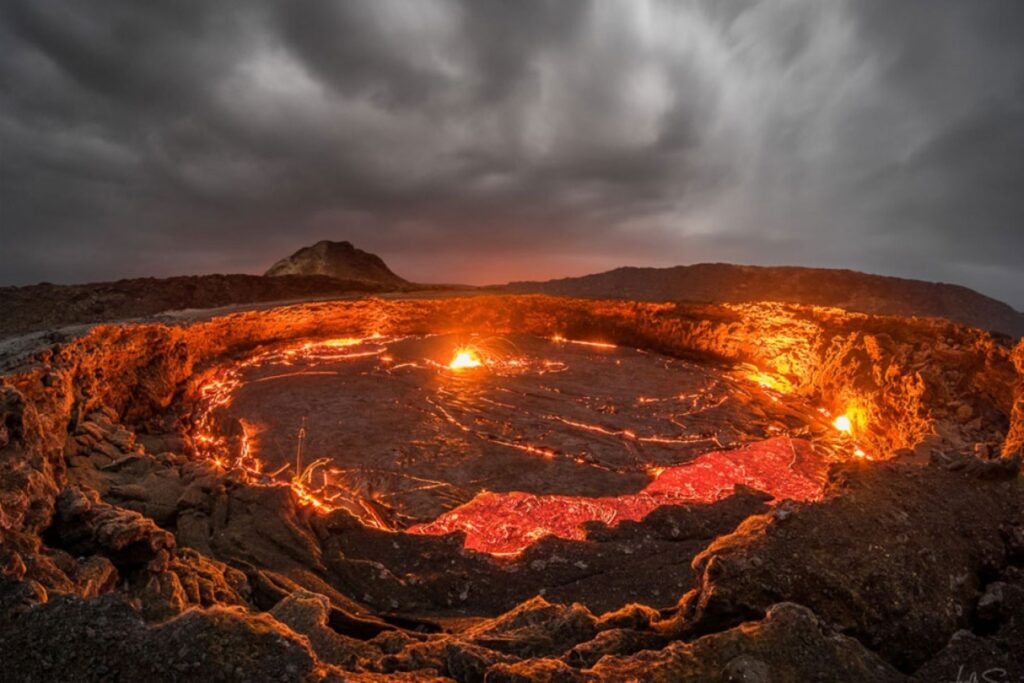
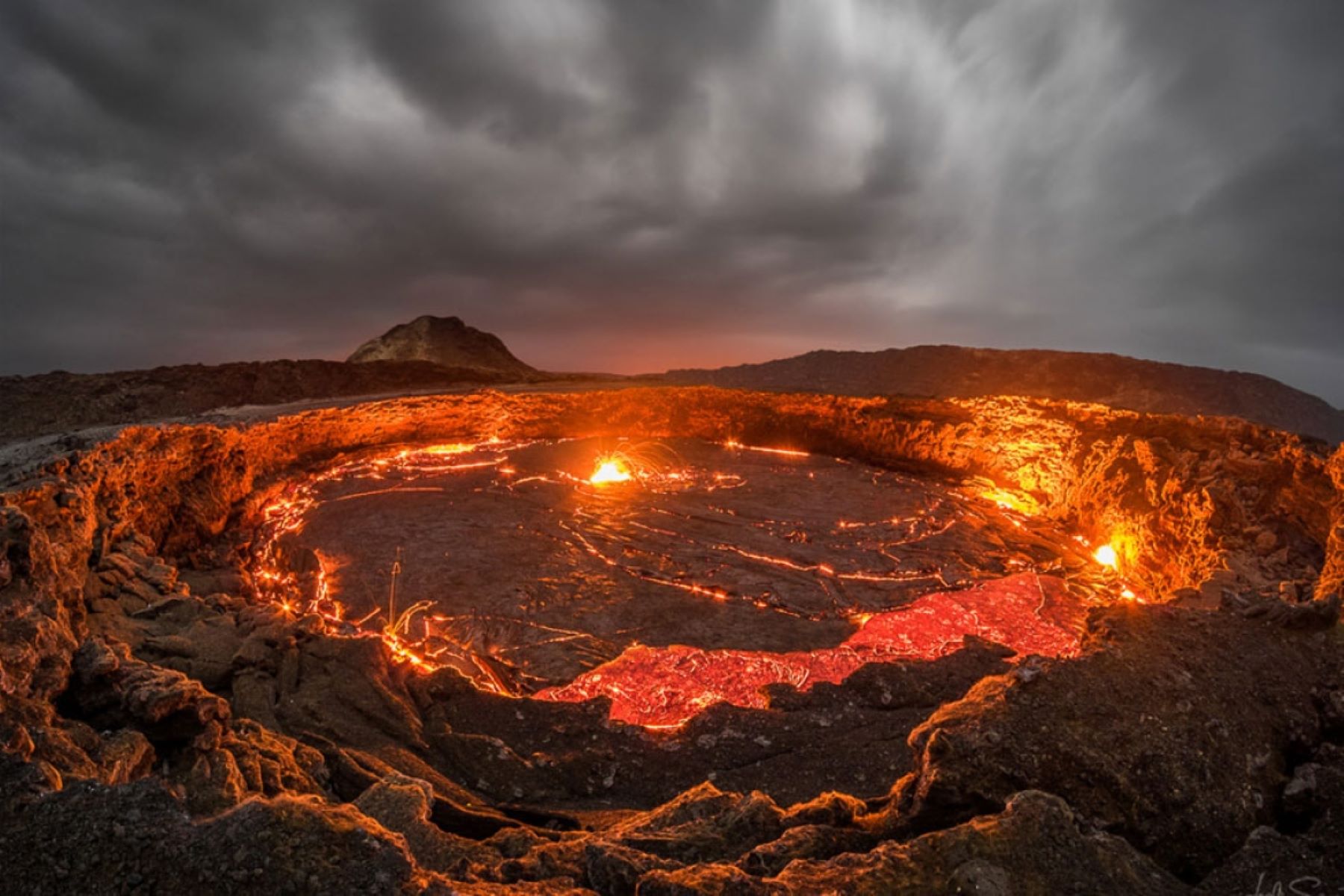
Erta Ale is a shield volcano in the Afar region and one of Ethiopia’s most recognized volcanic landmarks.
Its crater and volcanic terrain have made it a major point of interest for geology enthusiasts and adventure travelers. The volcano has historically been known for lava-lake activity, although volcanic conditions can change and should never be assumed to remain the same.
A visit to a volcanic area requires much more than ordinary sightseeing. Terrain, heat, volcanic gases, weather and security conditions can all affect whether an excursion is possible.
For future planning, travelers should confirm:
- Current volcanic activity and access restrictions.
- The latest security situation.
- Whether a visit is officially permitted.
- The availability of experienced local professionals and appropriate safety arrangements.
Erta Ale should not be treated as a guaranteed attraction or a destination that can be visited safely at any time.
3. The Vast Salt Flats of Danakil
The salt flats are another defining feature of the Danakil Depression. Broad areas of pale salt stretch across the dry landscape, creating striking patterns and a sense of immense openness.
Salt has played an important role in the region’s traditional economy. For generations, local communities have developed ways of extracting and transporting salt in a demanding environment.
The salt flats offer an opportunity to understand the relationship between natural resources, local livelihoods and the geography of the Afar region.
For photographers, the landscape can provide striking contrasts between white salt, dark volcanic rock and the surrounding desert.
4. Traditional Salt Mining and Camel Caravans
Traditional salt production is an important part of the cultural and economic history associated with the Danakil region.
Salt extraction and transport have historically connected the lowland areas with communities in the Ethiopian highlands. Camel caravans are part of this well-known tradition.
Learning about salt production can help travelers appreciate the knowledge and hard work required to live and work in an extreme environment.
If cultural visits become appropriate and permitted in the future, visitors should use responsible local operators, respect workers’ privacy and ask permission before photographing people.
5. Afar Culture and Local Traditions
The Afar people have a long history in the Horn of Africa and a strong connection to the region’s dry landscapes.
Their traditions, knowledge of the environment and ways of adapting to challenging conditions are an important part of the area’s identity.
Responsible cultural tourism should prioritize respectful interaction rather than treating local communities as attractions. Travelers should follow local customs, ask permission before taking photographs and support legitimate local services when visits are permitted.
Understanding Afar culture adds depth to the story of the Danakil Depression. The region is not only a geological destination; it is also home to communities with their own histories, livelihoods and traditions.
6. Lake Afdera: A Salt Lake in the Afar Region
Lake Afdera is another geographical feature associated with the wider Danakil region. The lake and surrounding area are known for salt production and the stark landscapes of northeastern Ethiopia.
Lake Afdera can be useful to study when researching the geography, natural resources and traditional industries of the region.
Whether it can be included in a future itinerary depends on the current security situation, road conditions and official access restrictions.
Why Is the Danakil Depression So Hot?
The Danakil Depression is widely known for its extreme temperatures. Its low elevation, arid climate, strong sunshine and limited shade contribute to very challenging conditions.
Heat exposure can cause dehydration and heat illness, particularly during outdoor activities or long journeys in remote areas.
For any future trip that is officially permitted, travelers should take professional advice about hydration, appropriate clothing, physical fitness and medical preparation. They should also confirm that their travel insurance covers the planned activities and any required emergency evacuation.
The environment itself makes the Danakil Depression a demanding expedition destination, even apart from security concerns.
Danakil Depression Itinerary: A Future Planning Example
The following outline is provided for general travel research only. It is not a recommendation to travel now, and it does not confirm that any route is currently safe or open.
Day 1: Arrival and regional planning
- Review current official travel advice and access requirements.
- Confirm whether the intended region can legally and safely be visited.
- If travel is permitted, coordinate transport, accommodation and safety arrangements with qualified local professionals.
Day 2: Dallol and the salt flats
- If authorized and safe, learn about Dallol’s geothermal formations.
- Explore the geological features of the salt flats under professional guidance.
- Respect environmental restrictions and avoid hazardous areas.
Day 3: Volcanic landscapes and onward travel
- Assess whether any volcanic excursion is permitted based on current security and volcanic conditions.
- Learn about the region’s geology where access is authorized.
- Arrange onward travel only after confirming the latest road, transport and security information.
Actual itineraries, travel times, accommodation and access arrangements may differ significantly. Do not make bookings based on this sample schedule alone.
When Is the Best Time to Visit the Danakil Depression?
October through March is traditionally considered a comparatively cooler period for researching or planning a Danakil expedition, although temperatures can remain severe.
Weather is only one factor in deciding whether to travel. Before choosing dates, check:
- Government travel advisories for the Afar region.
- Current security and road conditions.
- Official access rules and any necessary permits.
- Weather forecasts and heat risks.
- Volcanic conditions, where relevant.
- Medical support and emergency evacuation arrangements.
A cooler season does not automatically mean the destination is safe to visit. Security and official access conditions must take priority over the calendar.
How Much Does a Danakil Depression Tour Cost?
The cost of a future Danakil Depression expedition may depend on:
- The length of the itinerary.
- Vehicle type and transport arrangements.
- Professional guides and other local services.
- Accommodation and meals.
- Permits, where applicable.
- Safety arrangements and logistical requirements.
- Road conditions and the availability of services.
Because conditions and access restrictions can change, it is best to request a current, itemized quotation rather than rely on outdated online prices.
Before making a payment, ask the operator to explain exactly what is included, what is excluded, the cancellation policy and how the booking will be handled if travel becomes unsafe or access is restricted.
Is the Danakil Depression Safe to Visit?
Safety is a critical consideration when researching the Danakil Depression.
As of October 25, 2026, official government advice differs in its exact wording, but several governments warn of serious risks in the Afar region:
- The Australian government advises against travel to the Afar Regional State because of security risks, including armed conflict, kidnapping and civil unrest. Read the advisory
- The UK government advises against all but essential travel to most of Afar and against all travel to certain border areas. It also reports travel restrictions affecting access to airports in Afar. Read the advisory
- The Canadian government identifies Afar among Ethiopia’s northern regions for which it advises avoiding all travel and warns of extreme heat, difficult terrain and limited medical services. Read the advisory
These advisories can change. Travelers should consult their own government’s latest guidance and follow local authorities’ instructions. A tour operator’s willingness to offer a trip does not, by itself, establish that travel is safe.
What to Know Before Planning a Future Expedition
If official guidance eventually permits travel and the route is confirmed as safe, travelers should consider:
- Transport: Remote tracks may require suitable four-wheel-drive vehicles and experienced drivers.
- Professional support: Use reputable, qualified local professionals and confirm any official security arrangements that are required.
- Water and supplies: Remote areas may have limited services, so appropriate supplies and contingency plans are essential.
- Medical preparation: Extreme heat and limited medical access can make minor health problems more serious.
- Communications: Confirm reliable emergency communication arrangements before departure.
- Insurance: Verify coverage for the destination, planned activities and emergency evacuation.
- Flexible planning: Be prepared to postpone or cancel if official advice, road conditions or access rules change.
These are general expedition-planning considerations, not a substitute for current official safety guidance.
Explore Ethiopia with Peak Ethiopia Tours & Car Rental
Peak Ethiopia Tours & Car Rental is based in Addis Ababa and offers travel planning, private tours, vehicle rental with a driver and city sightseeing services.
If you are researching the Danakil Depression for a future trip, you can contact our team to discuss travel information and alternative destinations that may suit your schedule and interests.
We recommend confirming current official travel advice before considering any itinerary in the Afar region. Where travel is not advised, we can discuss other destinations in Ethiopia according to current conditions.
Contact Peak Ethiopia Tours & Car Rental
- Website: https://peakethiopiatours.com/
- Email: info@peakethiopiatours.com
- Phone / WhatsApp: +251 925 963 217
- Phone / WhatsApp: +251 941 585 806
Frequently Asked Questions About the Danakil Depression
What is the Danakil Depression famous for?
The Danakil Depression is known for its colorful geothermal landscape at Dallol, salt flats, volcanic terrain, extreme heat and traditional salt-mining activities.
Where is the Danakil Depression located?
It is located in northeastern Ethiopia, mainly in the Afar region, within the geologically active Afar Triangle.
Can I visit Dallol and Erta Ale on the same trip?
Historically, some organized expeditions have combined these attractions. Whether such a trip can be undertaken now depends on current security advice, official access restrictions, volcanic conditions and transport availability. Do not assume that a route is currently safe or open.
How many days are needed for a Danakil Depression tour?
Past organized expeditions have commonly lasted several days, depending on the route and the sites included. The appropriate duration for any future trip must be determined by current access, logistics and safety requirements.
What should I know about the weather?
The region is extremely hot and arid, with limited shade and challenging outdoor conditions. Heat illness and dehydration are significant concerns.
Is the Danakil Depression suitable for families?
The combination of extreme heat, remote terrain, limited medical facilities and current security concerns makes this a particularly demanding destination. Families should not plan a visit unless official guidance permits travel and qualified medical and travel professionals confirm that the proposed arrangements are appropriate.
What other destinations in Ethiopia can I research?
Depending on current travel advice, interests and available transport, you may wish to explore Addis Ababa’s cultural attractions, the Rift Valley lakes, or other Ethiopian destinations that are appropriate for your travel dates.
Conclusion: Discover the Natural Wonders of the Danakil Depression
The Danakil Depression is an extraordinary part of Ethiopia, combining colorful geothermal formations, salt plains, volcanic landscapes and a rich human history. Dallol, Erta Ale and the region’s traditional salt industry help explain why it has attracted interest from travelers and geology enthusiasts around the world.
However, responsible travel starts with accurate information. Before planning an expedition, check the latest government travel advice, confirm official access conditions and take the region’s extreme environment seriously.
For more information about Ethiopia travel planning, private tours and vehicle rental, visit Peak Ethiopia Tours & Car Rental at https://peakethiopiatours.com/.